Published
- 2 min read
Linux Kernel 7.0 Confirmed by Linus Torvalds
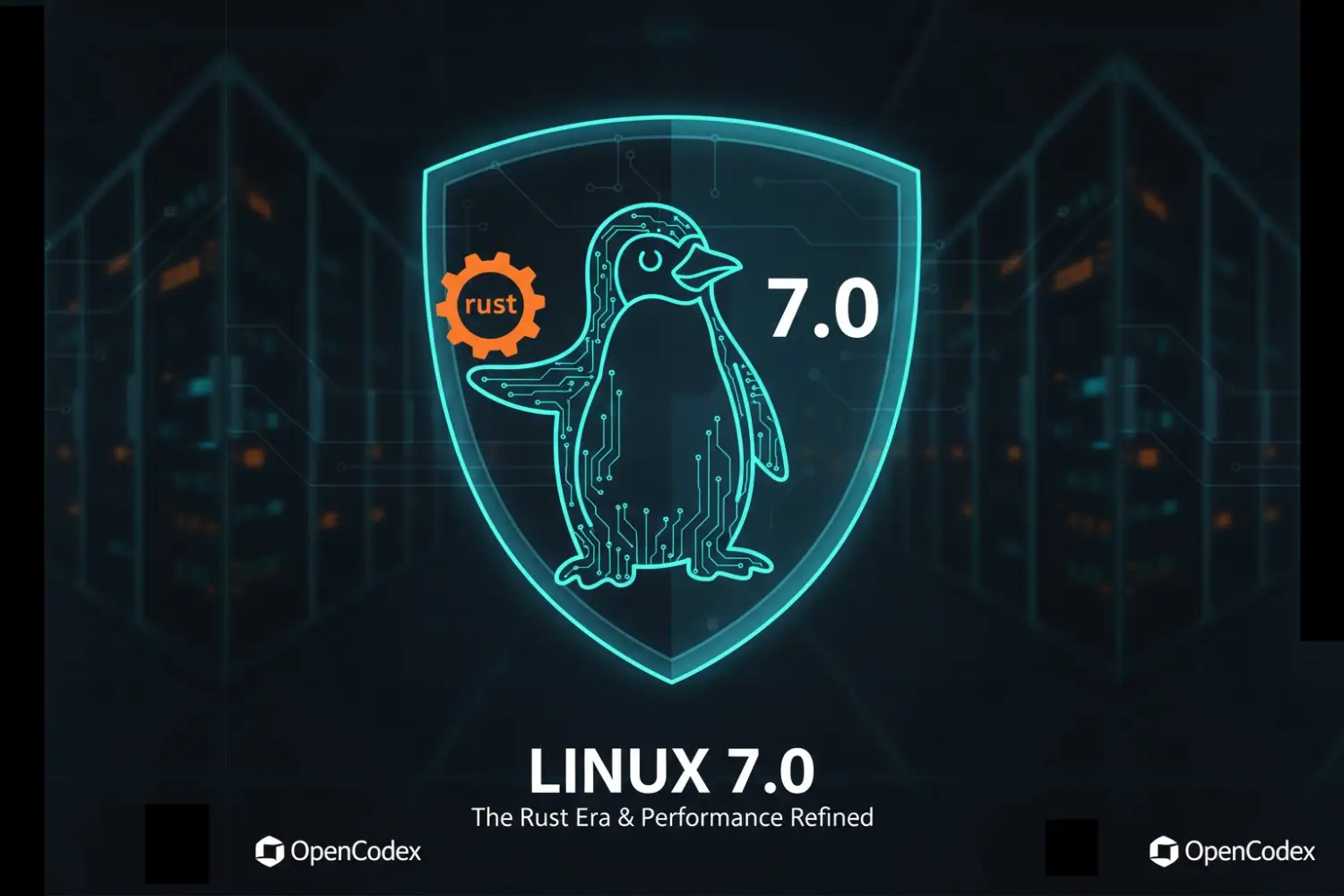
Linux 7.0 is here
Linus Torvalds says the version number change is almost arbitrary because “he’s running out of fingers to count the 6.x versions,” but let’s be honest—this version feels like a turning point. Here’s my take on what really matters and what’s just noise.
Rust in the Kernel
We’ve been hearing for years that Rust would make its way into the kernel to fix and save us from memory errors. Until now, it seemed more like an experiment to keep Rust fans happy, but in kernel 7.0, things are getting serious.
It’s no longer a “Hello World”. With the integration of real drivers (like the new Nova driver for NVIDIA GPUs) written in Rust, the kernel finally acknowledges that C, while the undisputed king, needs a knight in shining armor that doesn’t leave security holes every time someone mishandles a pointer. If you’re a developer and haven’t looked into Rust yet, Kernel 7.0 is sending a giant signal.
Performance
There’s a pretty interesting technical improvement: the TIP Time Slice Extension, and the removal of outdated standards like HIPPI. This is basically an optimization that allows the kernel to better handle CPU-intensive processes without causing other processes to hang. In simple terms, your computer should feel faster and more responsive, especially when you’re performing heavy tasks or multitasking.
This results in a much smoother desktop experience while performing heavy multitasking. For us developers, who have our IDE, Docker, and 50 Chrome tabs open, this is exciting.
Conclusion
Many will say it’s just marketing. A lot of old drivers and support for SHA-1 have been removed. It’s a cleaner kernel, more focused on modern hardware, and, above all, ready for what’s coming in Ubuntu 26.04 LTS, since it will arrive just in time.
The Linux 7.0 kernel isn’t a revolution that’s going to change how you run an ls, but it’s the solid foundation we needed to make the system more secure and faster on current hardware. If you use a rolling-release distro like Arch or CachyOS, update as soon as you can. If you’re on Debian… well, the update will arrive a little later.